
Ask ten security teams if they've adopted detection-as-code and some will say yes. Ask them to walk you through the full lifecycle of a single rule, from the moment someone spots a coverage gap to the moment that rule gets retired, and the story usually falls apart somewhere in the middle. A git repo full of rules isn't a program. It's a filing cabinet.
Operationalizing detection-as-code end to end means treating detection engineering like a real engineering discipline, with the same rigor around design, testing, deployment, and feedback you'd expect from any other production system.
Start with design, not with syntax
The teams that get this right don't open a code editor first. They start by mapping the gap they're trying to close to something concrete: an ATT&CK technique, a log source, a specific adversary behavior seen in the wild or named in a threat intel report. The rule itself is the last step of design, not the first.
A rule written without that grounding tends to detect an event instead of a technique. It fires on the log line someone happened to be looking at rather than the behavior that log line was one example of. That distinction is the difference between a detection that survives an adversary changing tools and one that fails the first time they do.
Build testing into development, not after it
Before a rule ever merges, it should run against sample data, both the malicious traffic it's meant to catch and the benign traffic it needs to ignore. This is where platform-specific quirks show up: how a query language handles nested fields, how a json command parses a payload, how case sensitivity affects a match condition. Catching those in a pull request is cheap. Catching them after deployment, when a rule silently never fires, is expensive in a way that doesn't show up on a dashboard.
Let CI/CD handle deployment, not judgment
Pipelines are excellent at what they're built for: syntax validation, consistent promotion across environments, and rollback when something breaks the build. What they can't tell you is whether a detection actually catches the technique it claims to cover. A rule can pass every automated check in a pipeline and still be functionally useless against a real adversary. Treating a green pipeline as proof of detection coverage is one of the most common mistakes in mature-looking programs. I drilled into that specific gap in Deployment isn't the finish line; this post treats it as one stage of a larger loop.
Close the loop with continuous validation
This is the stage most programs quietly skip. Deployed detections need to be tested against real adversary behavior on a recurring basis, not just once at launch. Log sources drift. Data formats change upstream. Adversaries adjust techniques. A rule that worked perfectly six months ago can be silently dead today, and without continuous validation nobody finds out until it matters.
Treat ownership and documentation as part of the pipeline
Every rule needs a named owner, a documented rationale, an ATT&CK mapping, and a record of tuning decisions, not as an afterthought but as fields that live alongside the rule itself. That's what makes a detection program resilient when the person who wrote a rule two years ago has moved teams.
Auditing the process
Auditing that the process is actually being followed is the other step almost everyone skips. I've watched organizations pour real effort into standing up a clean pipeline, only to find that one or two engineers on the team routinely skip it and push rules straight into the SIEM console. The pipeline is fine. The humans aren't using it. A detection-as-code program without that accountability layer spends the effort of building the pipeline without capturing the value it was meant to produce.
The mitigation that works without new tooling is reconciling the SIEM's own change/audit log against git history on a weekly cadence, dull, manual, but it surfaces the drift before the next incident does. RBAC on the console helps too, if the org can politically hold the line. Neither is glamorous. Both are cheaper than finding out during an incident that half the "deployed" ruleset was authored somewhere the DaC repo never saw.
The full loop
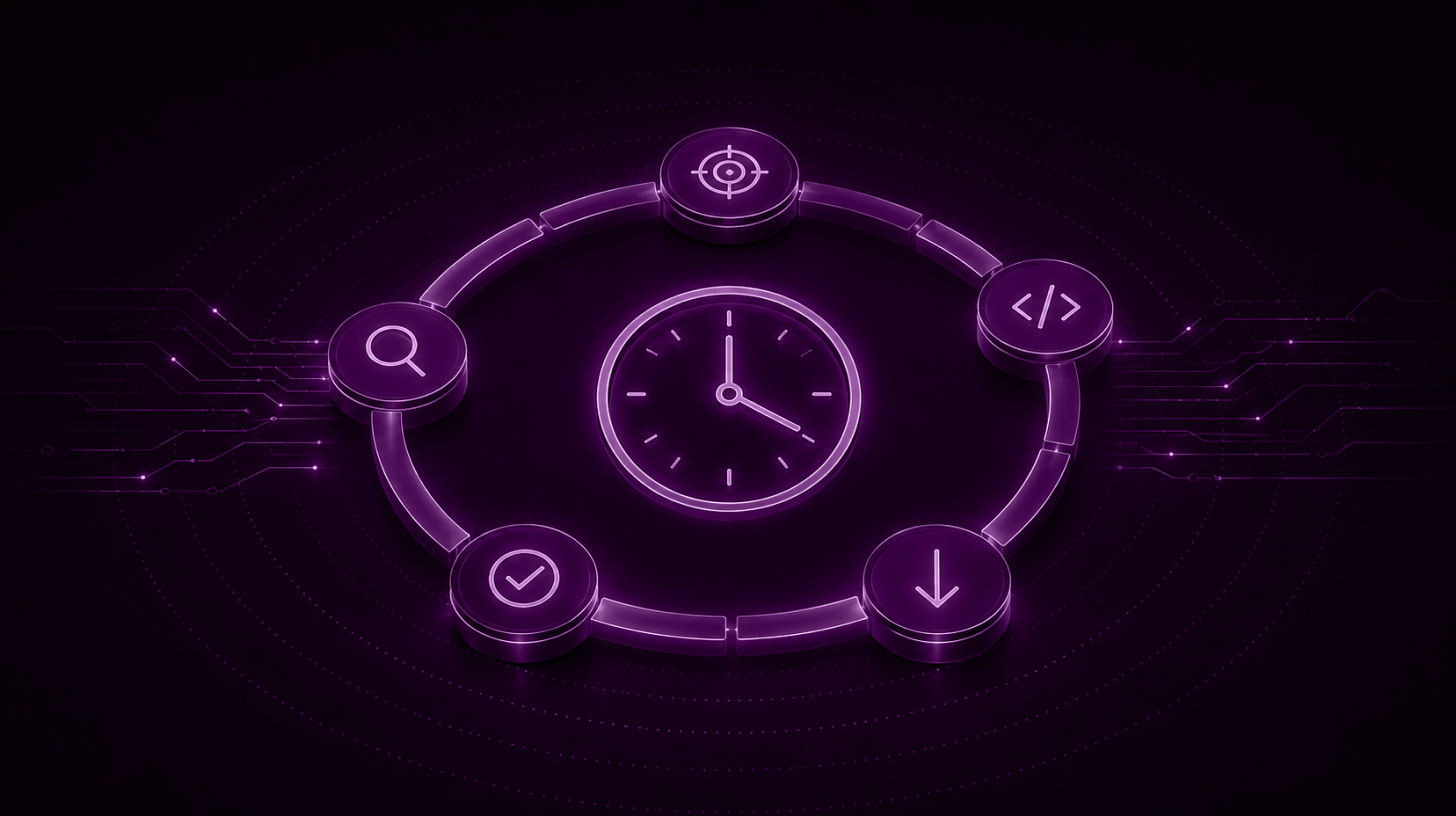
End to end, the lifecycle looks like this: design against a real technique, develop and test before merge, deploy through a pipeline that enforces consistency, validate continuously against adversary emulation, document and assign ownership throughout, and audit that the process is actually being followed. Any program that stops at deployment has solved half the problem detection-as-code was meant to solve.
(One paragraph about us, then back to the post.)
This is the problem Rilevera works on: end-to-end validation that deployed detections actually fire on the events they're supposed to, log-source health tied to the rules that depend on each feed, schema-drift recognition when an upstream log changes shape underneath a rule, and unauthorized-change detection for the times someone edits a rule directly in the SIEM console outside the DaC repo. The last one is the audit-gap piece; the first three are the validation loop. Take it for whatever it's worth.
The pipeline is the easy part
Standing up the pipeline is a weekend of YAML and a GitHub Actions workflow. Making it mean something, that a rule in that repo actually catches what it claims to catch, six months after the person who wrote it moved teams, on log sources that have quietly changed shape twice since, is the rest of the job. If a program stops when the pipeline goes green, what's been built is the filing cabinet. The discipline lives past the deploy.
Sources
- Your detection pipeline is green. That doesn't mean your detections work. — Rilevera, 2026-05. Prior post in the series; details the three silent-failure modes that make the continuous-validation and audit sections load-bearing rather than abstract.
- Detection Engineering Weekly — Zack Allen, ongoing. The newsletter this post is written for and the voice it tries to live up to.
- MITRE ATT&CK — MITRE Corporation, ongoing. Referenced in the design section as the canonical technique-mapping target when framing detections against behavior rather than event.